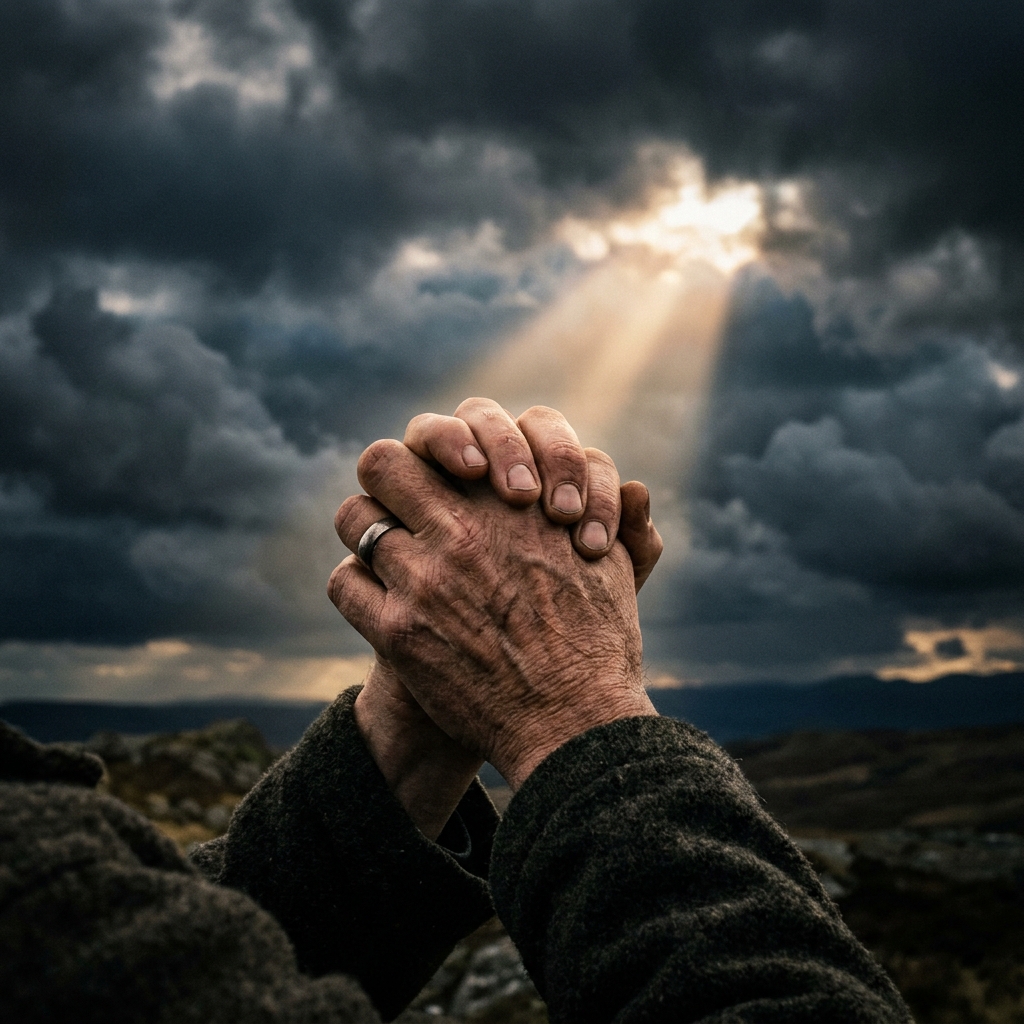
We live in an age of extraordinary global tension. News cycles deliver a near-constant stream of wars, uprisings, humanitarian disasters, and political instability. The temptation, for many believers, is to feel overwhelmed — to conclude, privately, that prayer in the face of such forces is naïve, or worse, futile. This article argues the opposite: that intercessory prayer is one of the most powerful forces for real-world change ever documented in human history, and that its necessity has never been greater than it is today.
The Historical Evidence for Prayer's Power
Before we speak theologically, let us speak historically. The evidence for prayer changing the course of nations is not merely a matter of faith — it is a matter of recorded fact.
Consider the miraculous deliverance of Dunkirk in 1940. Britain stood at the precipice of catastrophic military defeat. Over 330,000 Allied troops were surrounded by German forces on the beaches of northern France. King George VI called the nation to prayer. Churches across Britain filled. And what happened next confounded military historians for decades: an extraordinary calm settled over the English Channel — unprecedented for the season — allowing a flotilla of civilian vessels to complete one of the most improbable rescues in military history. Even Winston Churchill, a man not given to sentimentality about religion, described Dunkirk as a 'miracle of deliverance.'
Move further back in history. The Protestant Reformation, which reshaped the entire social and political fabric of Western civilisation, was carried not primarily by armies or treaties but by communities of prayer. The Welsh Revival of 1904-05, sparked largely through the intercessions of Evan Roberts, is documented to have transformed entire Welsh valleys in months — crime rates dropped, pubs emptied, police forces reported near-unemployment in some districts. These are verifiable historical events.
Biblical Foundations: Intercession as Authority
The Biblical basis for intercessory prayer begins in the very structure of creation. God, in His sovereign wisdom, chose to govern the world not as a divine autocrat who bypasses human agency, but as a Father who invites His children into partnership. 'Ask, and it shall be given to you,' Jesus instructed. 'Seek, and you shall find.' The language of seeking implies that something responds to being sought — that the universe is relationally structured in a way that prayer unlocks.
The prophet Ezekiel records one of the most startling statements in all of Scripture. God declares that He 'looked for a man among them who would build up the wall and stand before Me in the gap on behalf of the land so I would not have to destroy it, but found none' (Ezekiel 22:30). What this passage implies is that divine judgment was available to be averted — but the means by which it could have been averted was human intercession. When no intercessor was found, history took a darker path.
This is a staggering theological claim. It places intercessory prayer not at the periphery of human agency in history but at its very centre. Nations rise and fall not only because of economic forces, military might, and political decisions — they rise and fall because of the prayers that are or are not offered on their behalf.
The Apostle Paul, writing to Timothy, was not being merely polite when he urged 'that petitions, prayers, intercession and thanksgiving be made for all people — for kings and all those in authority, that we may live peaceful and quiet lives in all godliness and holiness' (1 Timothy 2:1-2). He was articulating a cosmic strategy: that the prayers of the Church shape the conditions in which peace becomes possible.
What Intercession Actually Does
There is sometimes a misunderstanding about what intercessory prayer is and how it works. Some imagine it as a kind of spiritual bribery — accumulating enough prayer to tip the divine scales in a desired direction. Others reduce it to a psychological exercise in self-comfort, helping the pray-er feel less helpless without actually changing anything external.
Both of these frameworks miss what Scripture actually describes. Intercession, in the Biblical model, is participation in divine governance. The intercessor stands in the breach — in the gap between the way things are and the way God intends them to be — and through prayer creates a channel through which divine grace can flow into a situation.
When we pray for a war-torn nation, we are not merely expressing our hope that things improve. We are, in a real and spiritually significant sense, deploying spiritual authority into that situation. We are inviting the Kingdom of God — its justice, its healing, its reconciliation — to bear upon a situation that has thus far resisted it. We are partnering with the Holy Spirit, who intercedes through us 'with groanings too deep for words' (Romans 8:26), in the divine work of restoration.
Dr. Momodu, who has prayed over conflicts in sub-Saharan Africa, in European cities, and in community settings across London, speaks of intercession as 'standing in history on behalf of those who cannot stand for themselves.' He describes moments in prayer where the weight of a nation's suffering settles on the intercessor, and the prayer that emerges is not polished or articulate but raw, genuine, and powerful — the prayer that moves heaven.
Prayer Movements That Changed Nations
Beyond individual intercession, church history is marked by organised prayer movements that produced documentable transformations.
The Moravian Brotherhood, beginning in 1727, launched what historians regard as the first round-the-clock prayer watch in recorded Christian history. From their community in Herrnhut, Germany, they maintained continuous intercession in rotating shifts — and this movement, sustained for over one hundred years, gave birth to the modern Protestant missionary movement. More missionaries went out from this small community of fewer than three hundred people than had gone out from the entire Protestant world in the preceding two centuries. Prayer fuelled the most significant missionary expansion in history.
In our contemporary era, South Korea's prayer movement is perhaps the most dramatic modern parallel. Korean Christians are renowned worldwide for their commitment to early-morning prayer — gatherings that begin at four or five in the morning and can draw thousands to church prayer halls before dawn. The revival that transformed South Korea from a war-devastated nation into one of the most Christianised countries in the world, with one of the world's fastest-growing churches, is inseparably linked to this culture of radical intercession.
The lesson is consistent across centuries and continents: where God's people pray with focus, faith, and persistence, history bends.
Practical Intercession: How to Pray for the World
Knowledge of prayer's power must translate into practice. For many believers, the question is not whether prayer works but how to pray when the scale of the world's needs feels overwhelming.
Dr. Momodu offers a framework he has used across his decades of ministry. Begin with worship — acknowledging who God is before you begin addressing what the world is. A prayer that begins with lament, while understandable, can become trapped in describing the problem. A prayer that begins with worship establishes the ultimate frame: that God is sovereign, that He is good, that He is still in control.
From worship, move to specific intercession. Choose one nation, one conflict, one people group, one situation. The tendency to pray vaguely for 'peace in the world' produces proportionally vague results. Specific prayer — naming a nation, its leaders, its people, the specific issues — is prayer that engages. Use the weekly news not as a source of despair but as a prayer list.
Pray with Scripture. The Psalms, in particular, are an inexhaustible resource for intercessors. When language fails, the Psalmist's language rarely does. Praying Psalm 46 ('God is our refuge and strength, an ever-present help in trouble') over a war zone connects the situation to an eternal promise with the full weight of divine authority behind it.
Finally, pray with others. The Matthew 18:20 principle — 'where two or three gather in My name, there I am with them' — suggests a multiplication of divine presence in communal prayer. Intercession is not only a solitary discipline. It is a community practice. Find or form a prayer group committed to interceding for the peace of the world.
Do Not Grow Weary
The parable of the persistent widow in Luke 18 is Jesus's explicit answer to the temptation to give up in prayer. The widow who came continually to the unjust judge — without status, without power, without leverage — eventually received justice through sheer persistence. 'How much more,' Jesus argues, 'will God bring about justice for His chosen ones who cry out to Him day and night? Will He keep putting them off?'
The answer is no. He will not keep putting them off. But the fullness of His answer requires the fullness of our asking.
In a world at war, the people of God are called not to silence but to intercession. Not to despair but to faith. Not to the conclusion that nothing can be done, but to the conviction — rooted in Scripture, confirmed by history, alive in the present — that prayer is among the most consequential things that can be done.
This is the call that Global Peace Ministry issues to believers everywhere: take up the discipline of intercession. Stand in the gap for your nation, for distant lands, for the suffering and the proud alike. You may never know, on this side of eternity, what your prayers have moved. But this much is certain: they have moved something.
Continue Reading
Explore more reflections, teachings, and testimonies from Global Peace Ministry.
← All Articles